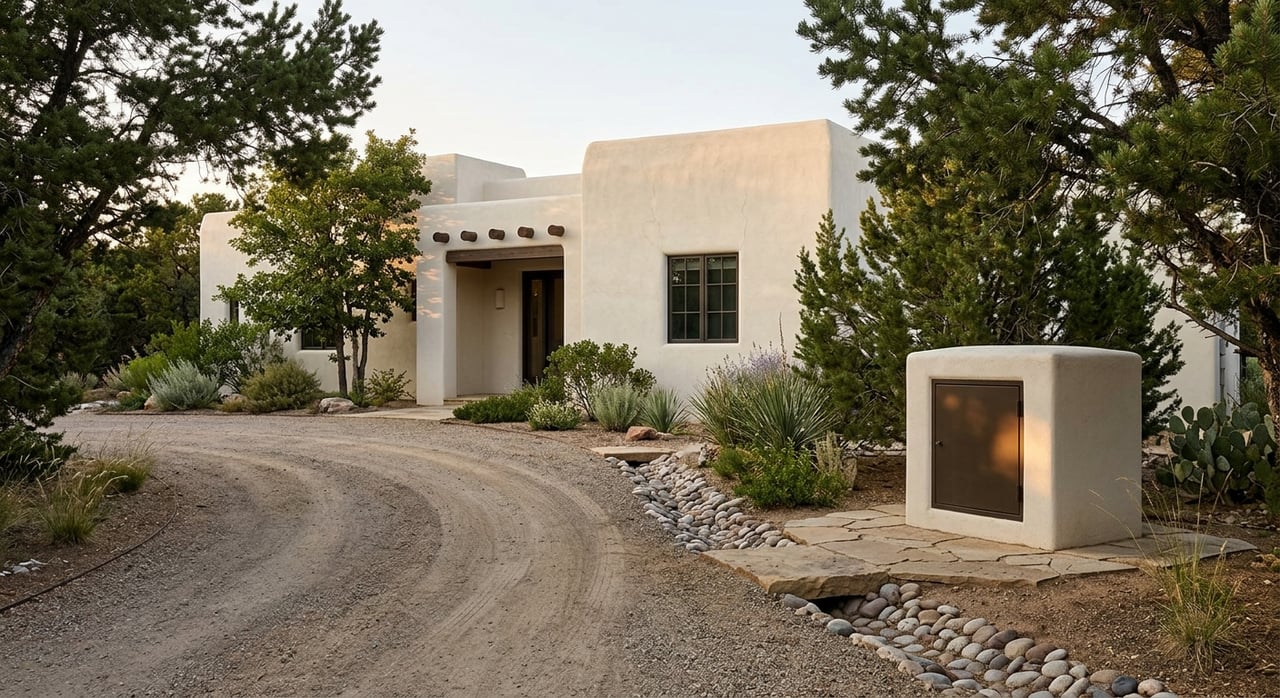
If you are buying acreage in Tesuque, the view is only part of the story. What looks like a simple land purchase can quickly turn into a layered review of water rights, road access, overlay rules, and recorded restrictions. The good news is that with the right due diligence, you can move forward with far more clarity about what a parcel can support and what it may require. Let’s dive in.
Why Tesuque acreage needs careful review
Buying land in Tesuque is different from buying a typical in-town lot. In this area, your plans may be shaped by New Mexico water law, Santa Fe County land-use rules, and the Tesuque Community District Overlay.
That means acreage alone does not tell you how usable a property is. A parcel may be beautiful and private, but still have limits tied to water, road access, slope, open-space requirements, or recorded easements.
Santa Fe County also notes that its development-permit system does not apply to Pueblo lands. Because of that, one of the first steps is confirming which jurisdiction applies before you rely on any county checklist or assumptions about permits.
Water often sets the real limits
In Tesuque, water is usually the first issue to examine. The New Mexico Office of the State Engineer says all ground and surface waters in the state belong to the public, are governed by prior appropriation, and require state authorization.
The Office of the State Engineer also regulates well construction, abandonment, and driller licensing. For a buyer, that means a well is not just a feature on a brochure. It is part of a regulated system that should be verified early.
Domestic well rules matter
OSE planning materials say a single-household domestic well is generally limited to 1.0 acre-foot per year. In some cases, that amount may increase to 3.0 acre-feet if no impairment to existing rights is shown.
Wells serving multiple households have separate limits. In some situations, a larger existing water right may be transferred to a well, which can materially change what the property can support.
Your planned use may exceed basic well limits
If you are considering horses, orchards, guest structures, or anything beyond ordinary household use, the water analysis becomes more important. A parcel that works for a single residence may not support your broader plans under the same permit or water-right structure.
Santa Fe County says a water-supply well cannot move forward without authorization to proceed. The County also states that manufactured-home placement requires an approved well permit or water-utility availability, plus an approved septic permit or proof of sewer service.
County staff may inspect well meters, cisterns, rainwater-harvesting systems, and off-site improvements. That makes it important to review the water file, not just ask whether a well exists.
What to verify on the water side
Before your inspection period ends, it is wise to confirm:
- Well permit status
- Well log
- Water-right file number
- Any meter requirements
- Whether your intended use exceeds domestic-well limits
- Whether any larger transferable water right is part of the property
Access is more than a road on a map
Acreage buyers often focus on boundaries, topography, and views first. In Tesuque, legal and practical access deserves the same level of attention.
Santa Fe County code requires every lot to have ingress and egress to a public or private road network or system. When access depends on a recorded agreement, subdivision plats must show easement and agreement recording data.
Private roads and shared driveways need documentation
If a parcel is reached by a private road or shared driveway, you want more than a verbal understanding. You will want recorded documents that show the access is legally established and identify who has the right to use it.
County code also addresses minimum access-easement widths in subdivision contexts. In some cases, off-site roads may be reduced only when drainage control is adequate.
Road permits may be required
Santa Fe County’s FAQ says a separate permit is required to access a County road. The County also states that road or driveway construction or reconstruction is a permit-triggering activity.
That can affect both timing and cost. A parcel may seem ready for a home, but the road work needed to serve it could still require approvals before construction can begin.
Maintenance matters in every season
Subdivision documents must state whether roads and drainage will be maintained by the County, the subdivider, or an owners’ association. County code also says covenants dealing with road-maintenance responsibilities may not be amended without County Development Review Committee approval.
In practical terms, you will want to know who handles maintenance during mud season, snow, or wildfire response. A scenic private road can be a real asset, but only if the maintenance obligations are clear and workable.
Tesuque overlay rules can narrow what you can build
One of the most important points for buyers is that the Tesuque Community District Overlay supplements the underlying zoning district. Where the overlay conflicts with base zoning, the overlay controls.
This is why older marketing summaries can be misleading. Santa Fe County adopted a Tesuque overlay amendment in 2024, so parcel review should be based on the current code rather than a prior listing description or informal summary.
Lot coverage and open-space rules can be significant
The current overlay sets a maximum lot coverage of 20 percent for both residential and nonresidential uses. That limit alone can affect how a house, guest structure, garage, barn, or other improvements fit on the site.
In parts of the planning area, smaller lots may also be tied to conservation easements or permanent open space. In the Residential Community district, 75 percent of gross lot area must be identified on the plat or by conservation easement as open space to meet base density.
Slope and ridgeline restrictions are important
The overlay includes special limits on steep-slope and ridgetop development. On slopes greater than 15 percent, the height cap is 18 feet, and pitched roofs are prohibited on ridgetops.
These rules can shape both design and siting. If you are picturing a larger home form or a structure placed high on the land, the overlay may require a different approach.
Rural character standards may affect site design
Tesuque also has more specific fence and wall rules than many buyers expect on rural land. In corridor areas, permits are required, heights are capped, chain-link is prohibited, and material and setback rules are intended to preserve the area’s rural character.
The overlay also applies special storm-drainage rules to runoff from uses such as stables and kennels. In addition, wildlife corridors must be identified early so development can be adjusted to avoid disturbance.
Covenants can mean much more than HOA rules
When buyers hear the word "covenants," they often think of a standard homeowners association. In Tesuque, recorded restrictions can be broader and more consequential.
Depending on the parcel, you may be dealing with access easements, conservation easements, trail easements, open-space restrictions, and road-maintenance covenants. Any of these can materially affect where you build, how you access the land, and what improvements are realistic.
Historic trails may appear in title work
Tesuque planning documents emphasize historic social trails and recommend recording trail easements with the County Clerk so points of access and allowable uses appear in title searches and are disclosed to new owners.
That means title review is not a formality. It is one of the main ways to understand whether there are recorded trail-related rights or other limitations affecting the parcel.
Recorded documents should be reviewed early
Before inspection objections expire, buyers should pull the recorded plat, all easements, any road-maintenance covenants, and any conservation or open-space restrictions. These documents often reveal the true development envelope of the property.
A parcel can have generous acreage on paper while still offering a narrower practical building area. Early review helps you make decisions while you still have room to negotiate or step back.
A practical Tesuque acreage checklist
If you are evaluating land in Tesuque, here are the core items to verify as early as possible:
- Confirm the parcel’s zoning district and overlay district
- Confirm whether the property is inside or outside County jurisdiction
- Review the title commitment, recorded plat, and all easements
- Review any road-maintenance covenants and conservation restrictions
- Verify the well permit, well log, and water-right file details
- Confirm whether intended use fits within domestic-well limits
- Determine whether access is via public road, private road, or shared driveway
- Confirm whether a County road access permit is required
- Review road and driveway construction permit needs
- Check grading and clearing permit needs
- Verify septic approval status or sewer-service availability
- Review floodplain status, setbacks, height limits, and slope constraints
- Ask whether rainwater-catchment requirements apply to the planned house size
Build the right local due-diligence team
Because Tesuque acreage review spans state water law, county development code, and private recorded restrictions, buyers often need a coordinated group of specialists. Depending on the parcel, that may include a title officer, surveyor, water-rights attorney, civil engineer, well driller, septic designer, and county land-use planner.
This is where local guidance becomes especially valuable. A calm, detail-oriented review at the front end can help you avoid costly surprises later and give you a clearer sense of whether a property truly matches your goals.
If you are considering acreage in Tesuque and want experienced, discreet guidance on evaluating land, water, access, and parcel-specific constraints, Stedman/Kehoe/Hirsch/Pollack can help you approach the process with care and clarity.
FAQs
What should you verify first when buying acreage in Tesuque?
- Start with water, legal access, zoning, the Tesuque overlay, and recorded easements or covenants, since these issues often shape whether the parcel fits your plans.
How do domestic well limits affect a Tesuque land purchase?
- OSE planning materials say a single-household domestic well is generally limited to 1.0 acre-foot per year, with a possible increase to 3.0 acre-feet if no impairment to existing rights is shown, so intended uses beyond basic household needs should be reviewed carefully.
Why does road access need legal review for a Tesuque property?
- Santa Fe County requires ingress and egress to a public or private road network or system, and access based on recorded agreements should be documented in plats and title records.
What does the Tesuque Community District Overlay mean for a buyer?
- The overlay supplements the base zoning district and controls when there is a conflict, which means height, lot coverage, open-space, slope, drainage, and fence rules may be more restrictive than a buyer expects.
What kinds of covenants can affect acreage in Tesuque?
- Beyond typical HOA-style rules, recorded restrictions may include access easements, conservation easements, trail easements, open-space requirements, and road-maintenance covenants.
Who should be on your due-diligence team for a Tesuque acreage purchase?
- Depending on the property, helpful specialists may include a title officer, surveyor, water-rights attorney, civil engineer, well driller, septic designer, and county land-use planner.