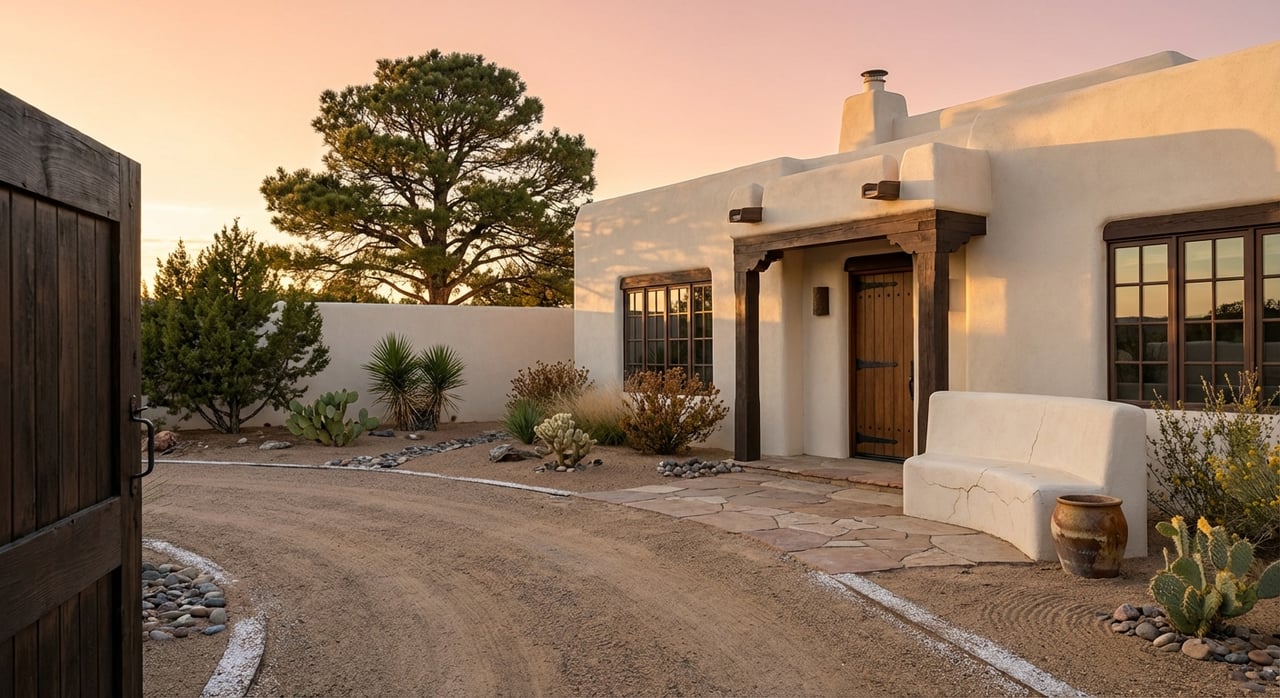
Looking at Tesuque and wondering which kind of property truly fits the way you live? With options that range from storied adobe compounds to contemporary view estates and multi‑acre parcels, the choices can feel both inspiring and complex. You want the right blend of privacy, access, architectural character and ongoing maintenance. In this guide, you’ll learn how Tesuque’s main property types align with different lifestyles, what trade‑offs to expect, and the due diligence that protects your purchase. Let’s dive in.
Tesuque at a glance
Tesuque refers to two distinct places in the same north‑of‑Santa Fe landscape: the Pueblo of Tesuque and the surrounding Tesuque Village and valley. The Pueblo is a sovereign community with its own lands and enterprises; you can learn more about its history and geography on the Pueblo of Tesuque’s official site. The neighboring Tesuque Village and valley are unincorporated Santa Fe County communities known for private estates and a semi‑rural feel.
Drive times to downtown Santa Fe vary by parcel and route. In practice, many homes sit roughly 5 to 7 miles from the Plaza, which often translates to about 10 to 20 minutes depending on location and traffic. For buyers, it is wise to confirm commute times for each specific property rather than assume a single average applies.
Tesuque’s appeal rests on quiet privacy, established cultural touchpoints and a green valley setting. You will find gallery and artisan activity nearby, including long‑running destinations such as Glenn Green Galleries, and easy access to downtown arts and the Santa Fe Opera. The setting supports both full‑time living and second‑home retreats.
Market context and pricing
Tesuque’s market runs on small numbers of listings and high‑value estates, so month‑to‑month statistics can move quickly. As a snapshot, one aggregated data source reported a median listing price of about 2.1 million dollars in December 2025, while a mid‑2025 monthly sold‑price sample landed closer to 1.45 million dollars. That divergence is normal in a small, luxury‑weighted submarket. Date your numbers, look at both listing and sold medians, and check longer trend windows before drawing conclusions.
How planning and land use shape choices
Santa Fe County applies community‑specific rules in the Tesuque area under the Tesuque Community District. These standards guide density, building envelopes and open‑space expectations that preserve agricultural land, acequias and historic corridors. If you plan to add structures, subdivide or pursue major renovations, review the Tesuque Community District provisions and confirm any building‑envelope or easement constraints early.
Property types and lifestyle fit
Below are the four most common Tesuque property profiles. For each, you will find a quick lifestyle match, typical features and the key trade‑offs to weigh.
Historic compounds
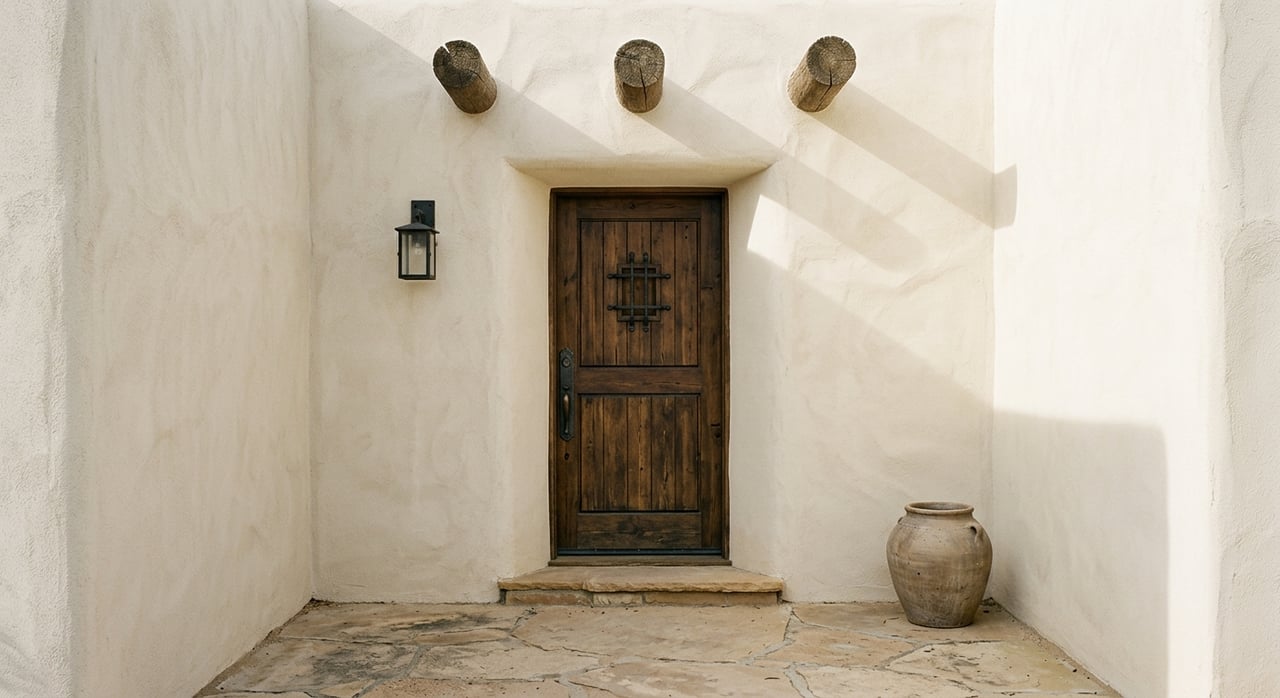
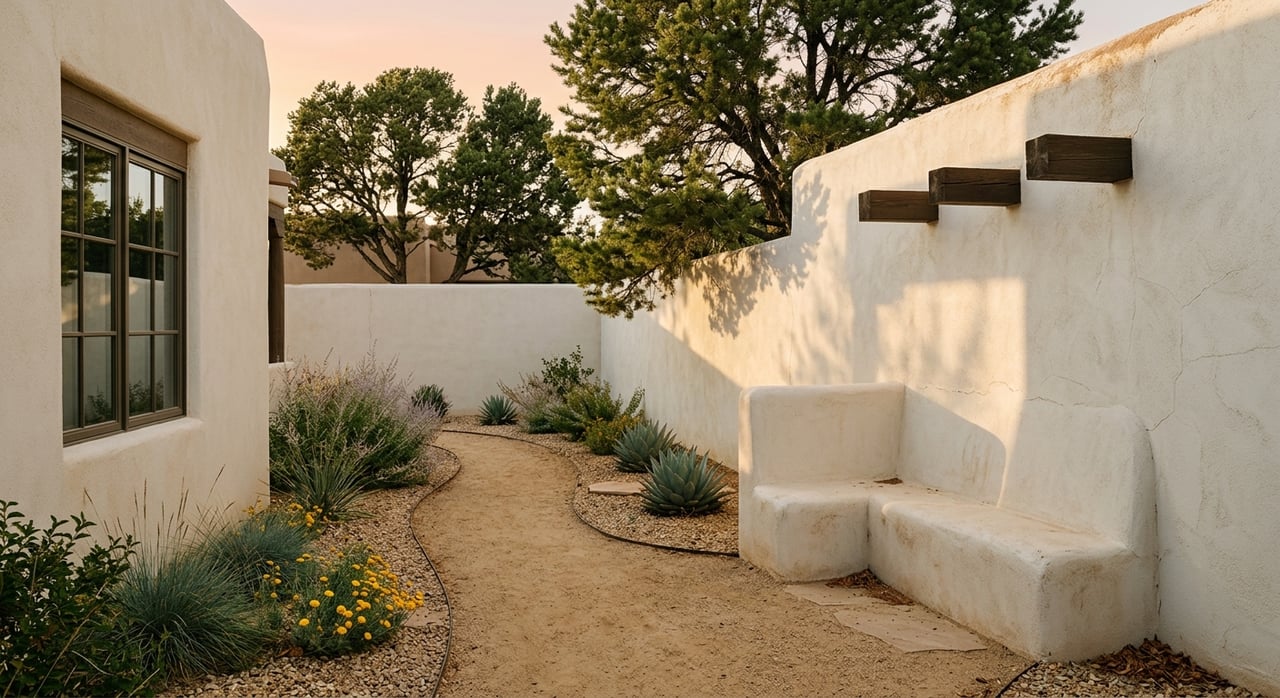
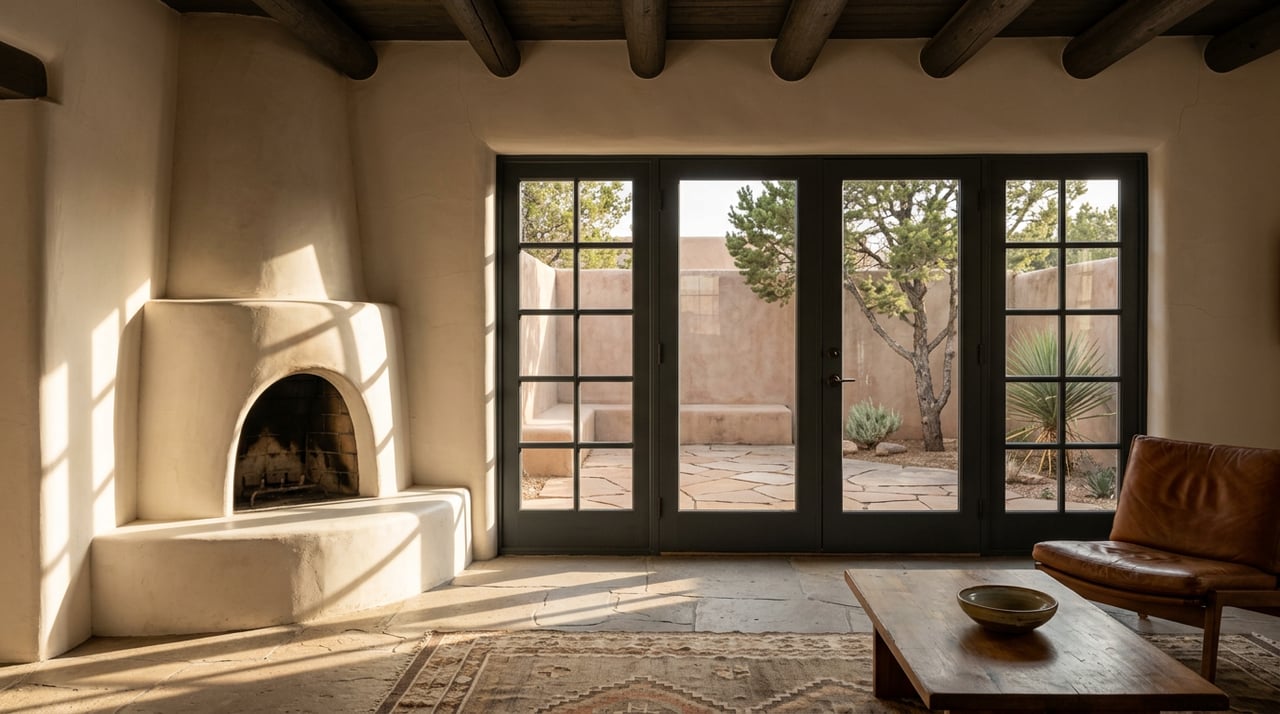
Historic compounds are often multi‑structure properties arranged around one or more courtyards. Expect signature adobe details like vigas, kiva fireplaces, saltillo tile and deep portals, plus mature trees and irrigated pockets where the creek or acequias allow. Many began life in the early to mid‑1900s and evolved over time through thoughtful additions.
- Lifestyle fit: You value authenticity, courtyard living and frequent entertaining. You want privacy with a neighborly village feel and proximity to galleries and restaurants.
- Pros: Distinctive architecture, multiple outdoor rooms, strong sense of place. Guest casitas and studios are common.
- Cons: Adobe and historic materials need specialist care. Budget for stucco re‑coating, drainage control, roof and beam maintenance, and preservation‑sensitive upgrades. The National Park Service outlines best practices for adobe stewardship in its Preservation Brief.
- Example reference: A named Bishops Lodge area compound with multiple structures and terraces illustrates the genre’s character and scale.
Artist retreats with built studios
Artist retreats prioritize dedicated creative space. Properties often include a large, light‑filled studio or a separate studio building, with higher ceilings, north‑light orientation, upgraded power for kilns or tools, and easy indoor‑outdoor flow for messy work. Sites are typically chosen for privacy and inspiring outlooks while staying within reach of galleries and collectors.
- Lifestyle fit: You need purpose‑built workspace, privacy to create and proximity to the Santa Fe art market. Ideal for full‑time artists and second‑home creatives.
- Pros: Turnkey studio infrastructure and strong appeal to a local art‑driven buyer pool.
- Cons: Specialty ventilation and power may require focused maintenance. Verify permits if your practice approaches commercial activity, and consider traffic impacts if you plan open studios.
View estates and custom modern homes
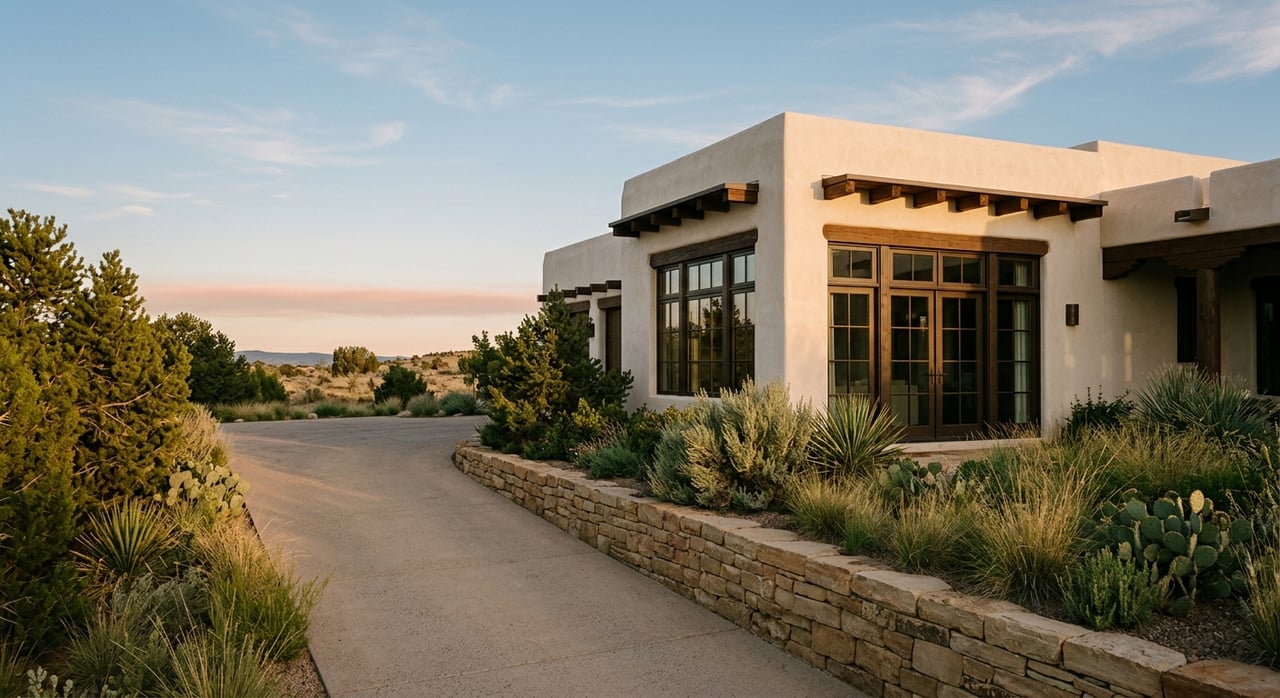
View estates sit on elevated parcels for broad outlooks to the Jemez and Sangre de Cristo ranges or back toward downtown. Architecture skews contemporary or refined Southwestern, with large portals, high‑performance glazing, guest houses and modern systems. Some newer builds pair clean interior lines with regionally respectful exteriors. For a sense of design direction and site placement, see a panoramic custom project from a local builder like this example.
- Lifestyle fit: You want striking views, modern conveniences and a high degree of privacy. Out‑of‑market buyers often choose this category for part‑time use with on‑site management.
- Pros: Dramatic outlooks, efficient systems, guest accommodations. Some gated communities include road and common‑area maintenance.
- Cons: Custom work can extend timelines. Further subdivision may be limited. Factor in access road and landscape care, including occasional snow and seasonal irrigation.
Acreage and ranch‑style parcels
Large‑lot offerings range from 3 to 100 plus acres on valley slopes and ridgelines. Buyers use them for private compounds, equestrian facilities, small agricultural pursuits, conservation easements or simply more distance from neighbors. Some subdivisions deliver paved access and underground utilities, while others require private wells and on‑site septic.
- Lifestyle fit: You prioritize space, seclusion and the option to build out multiple outbuildings. Equestrian or orchard‑minded buyers often start here.
- Pros: Maximum privacy and flexibility.
- Cons: Higher due diligence for water and access, longer drive times to services and potentially higher wildfire exposure. Shared or adjudicated well arrangements require document review.
Key trade‑offs to consider
- Privacy vs access: Ridge‑top acreage offers seclusion, while village‑area compounds keep you closer to galleries, restaurants and services.
- Authenticity vs maintenance: Adobe character is compelling, but it calls for ongoing care and specialist craftsmanship. Modern builds lighten maintenance but may carry HOA considerations.
- Solitude vs community: Remote acreage supports quiet living, while established neighborhoods offer an easy social rhythm and managed roads.
Practical due diligence for Tesuque buyers
A Tesuque purchase rewards careful checks tailored to rural and historic properties. Use the list below to reduce risk and align the home with your lifestyle.
Water: wells and water rights
New Mexico manages groundwater through the Office of the State Engineer, with domestic well rules that govern permits and volumes. In Tesuque, many properties use private or shared wells. Before you remove contingencies, confirm the well permit, obtain recent pump‑test and quality results, and review any well‑sharing or adjudication agreements. For context on groundwater and domestic rules, see this overview from the Utton Transboundary Resources Center hosted on paperzz.com.
Quick checklist:
- Well permit and well log in hand
- Recent yield estimate or pump‑test
- Lab water‑quality report
- Any shared‑well or adjudication documents
- Plan and costs if a cistern or hauled water is involved
Wastewater: septic vs sewer
Many Tesuque properties rely on septic systems. Ask for inspection results, maintenance records, the drainfield map and the system’s permitted capacity. If a lot indicates “septic needed,” obtain an engineered design and verify county environmental health requirements.
Adobe and historic construction
Adobe’s thermal comfort and timeless look are part of Tesuque’s charm, yet stewardship requires intention. Expect periodic exterior re‑coating, diligent drainage management and repairs by qualified craftsmen. For an accessible primer on common issues and best practices, review the National Park Service’s Preservation Brief on historic adobe.
Wildfire risk and home hardening
Tesuque sits within the Greater Santa Fe fireshed, where mitigation projects are active and insurance considerations vary by site. Request a home‑hazard assessment, evaluate defensible space and price out fuels‑reduction work in your budget. Regional coalitions and grants support ongoing adaptation efforts; you can track updates through fire‑adaptation news for the area.
Access, roads and services
Road maintenance responsibilities differ by address. Some gated communities include road care within HOA dues, while many rural lanes are private and require shared maintenance agreements. Confirm whether a road is county‑maintained or private, how snow removal is handled and whether there are any recorded agreements or special assessments.
Zoning, easements and building envelopes
Verify current zoning and any building‑envelope limits, open‑space or conservation easements, acequia easements and clustering requirements. Many Tesuque parcels fall within the Tesuque Community District, which can shape subdivision potential and intensity of use. Start with the county’s Tesuque Community District standards and pair that with a title and plat review.
Utilities and connectivity
Some subdivisions offer underground utilities, while more remote parcels require electrical extension, propane, septic and satellite or fixed‑wireless internet. Confirm utility proximity, hookup costs and any HOA‑provided infrastructure. For second homes, consider backup power and resilient communications.
A simple framework to match property and lifestyle
If you are weighing multiple Tesuque options, use this quick process to clarify fit.
Identify your top three priorities. Examples include privacy, access to the Plaza, maintenance tolerance, studio needs, outdoor acreage, views and proximity to galleries or restaurants. Rank them by importance.
Screen by property type using your priorities.
- High privacy plus acreage with minimal HOA: start with acreage and ranch‑style parcels.
- Creative workspace plus near‑gallery access: consider an artist retreat or a village‑area historic compound.
- Big views plus low‑maintenance systems and guest quarters: look at modern view estates and gated communities with managed roads.
- Historic authenticity plus courtyard living: focus on historic compounds with casitas.
- Build your contingency checklist. Protect your timeline and budget with separate contingencies for:
- Well permit, well log, pump‑test and any shared‑well documents
- Septic inspection, drainfield location and design confirmation for new systems
- Title review of all easements, rights‑of‑way, conservation or acequia rights
- Property inspections, with an adobe‑savvy preservation consultant if applicable
- Wildfire hazard assessment and insurance quotes
- HOA bylaws, road‑maintenance agreements and scope of services
- Utility verification for power, gas or propane, and internet options
Ready to explore Tesuque with a guide you trust?
Tesuque rewards buyers who match architecture and land to a clear lifestyle vision, then verify the details with a thoughtful team. If you want help curating properties that honor your priorities and protect your time, reach out to Stedman/Kehoe/Hirsch/Pollack for a private consultation. Our boutique, senior‑level approach and deep Tesuque expertise make the process calm, clear and rewarding.
FAQs
What is the difference between Tesuque Pueblo and Tesuque Village?
- The Pueblo of Tesuque is a sovereign Native community with its own lands and operations, detailed on the official Pueblo site. Tesuque Village and the valley are nearby unincorporated Santa Fe County communities known for private residences and a semi‑rural setting.
How long is the drive from Tesuque homes to the Santa Fe Plaza?
- It depends on the specific parcel and route. Many addresses are roughly 5 to 7 miles from the Plaza, which often means a 10 to 20 minute drive in typical conditions. Always time the route from the exact home you are considering.
How expensive are Tesuque estates compared to the rest of Santa Fe?
- The Tesuque market is small and luxury‑weighted, so short‑term medians swing. Recent snapshots showed a median list price near 2.1 million dollars in December 2025, while one monthly sold‑price sample in mid‑2025 was around 1.45 million dollars. Use multiple time frames and both list and sold data when assessing value.
What water and septic checks should I do before buying in Tesuque?
- Confirm the well permit and well log, get a recent pump‑test and lab results, and review any shared‑well agreements. For septic, request an inspection, maintenance records and the drainfield map, and secure an engineered design if a new system is needed.
Do Tesuque neighborhoods have HOAs, and what do they cover?
- Some subdivisions include road care and common‑area maintenance in HOA dues, while many rural lanes rely on private agreements. Verify whether roads are county‑maintained or private, how snow removal is handled and whether the HOA covers any utilities or water infrastructure.