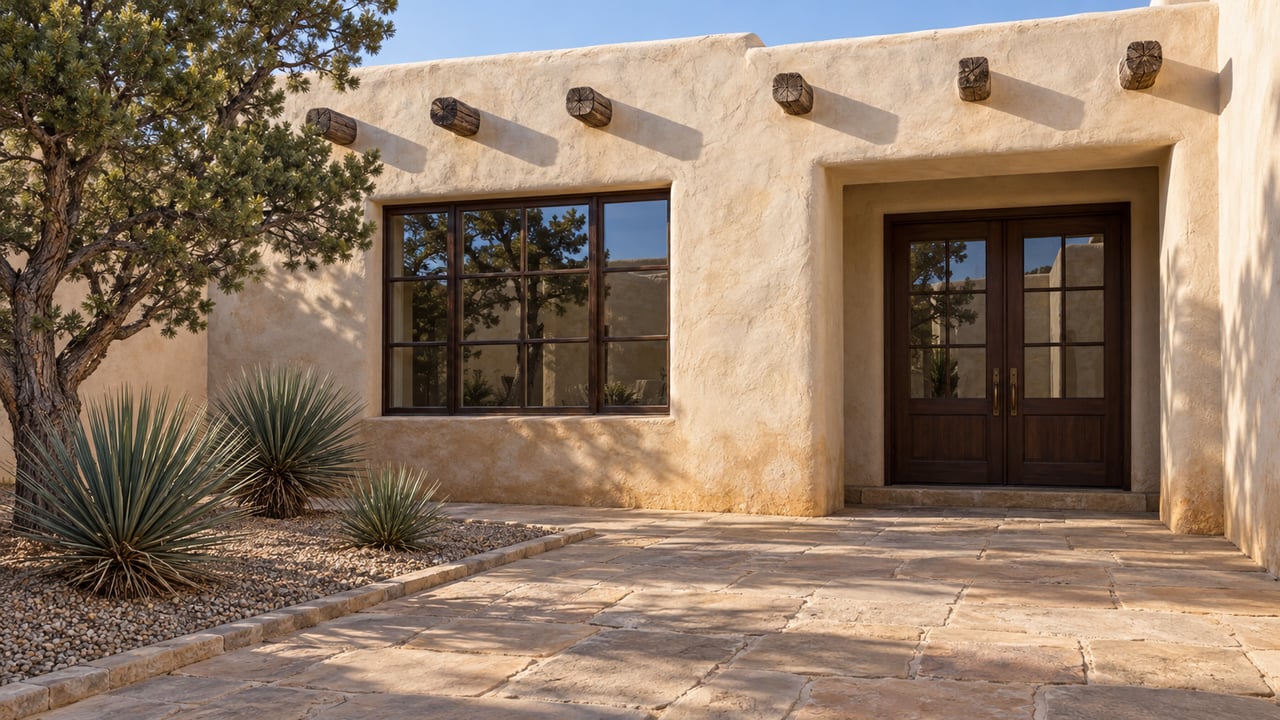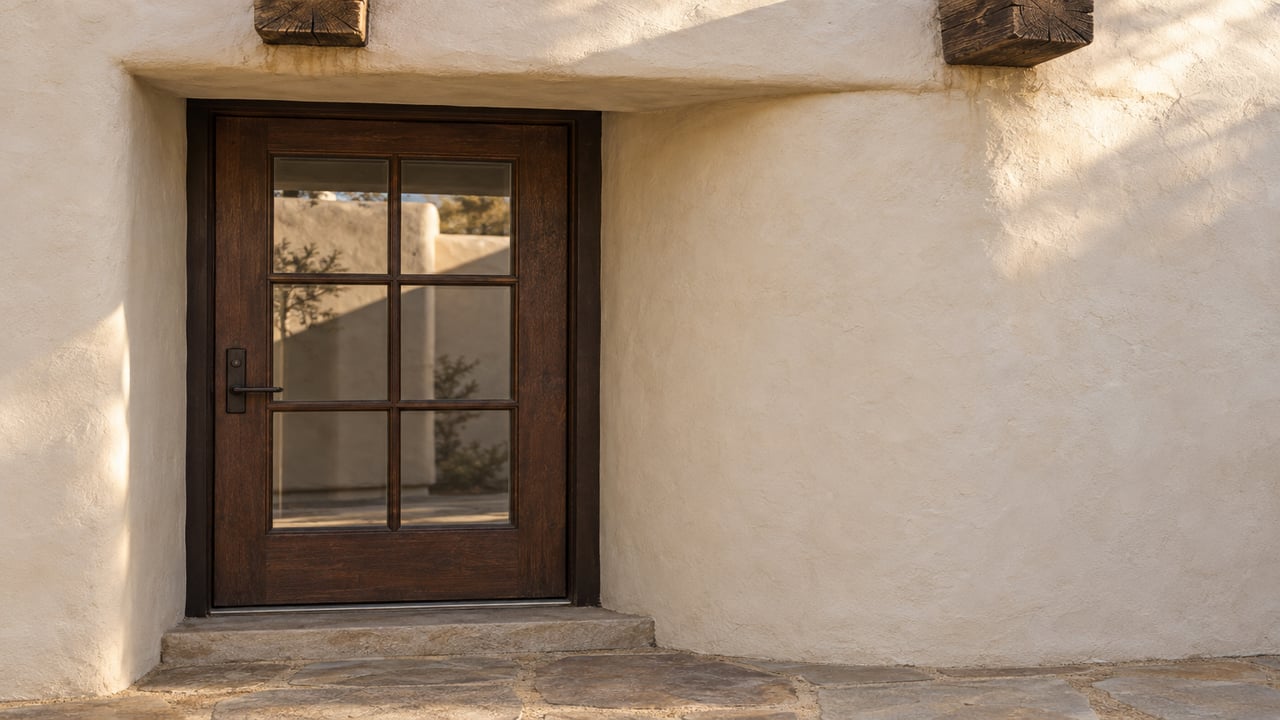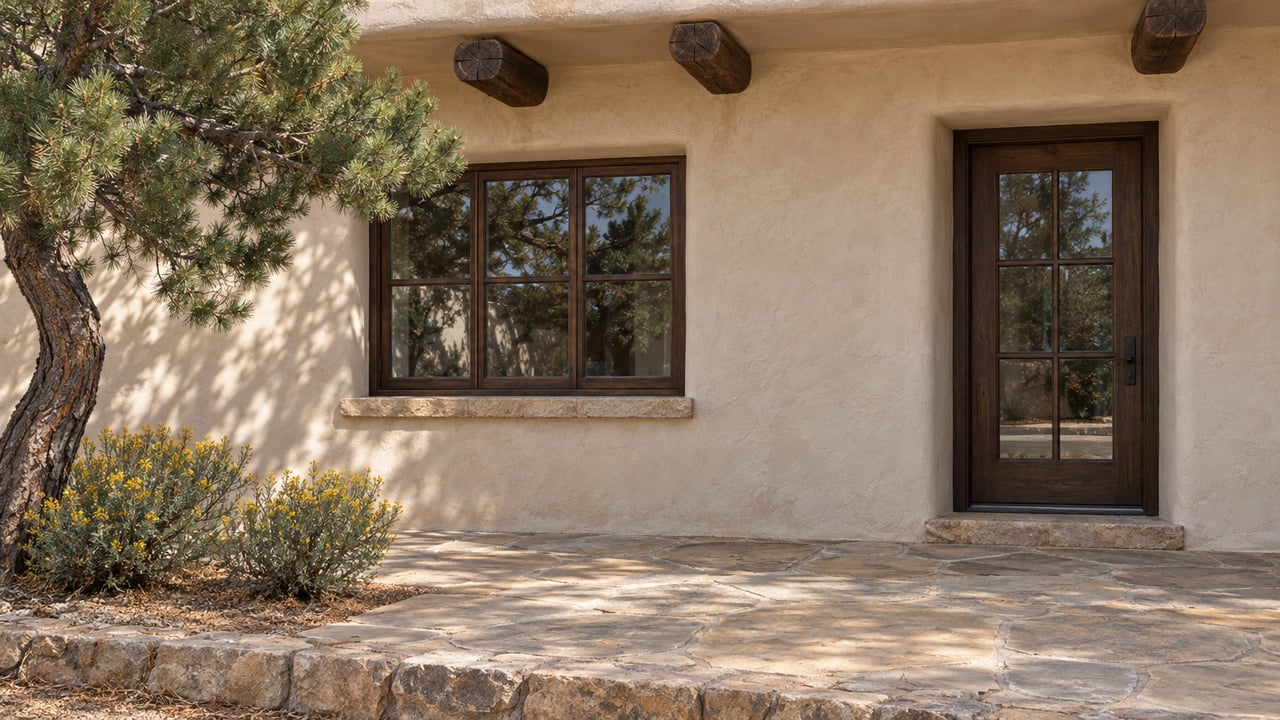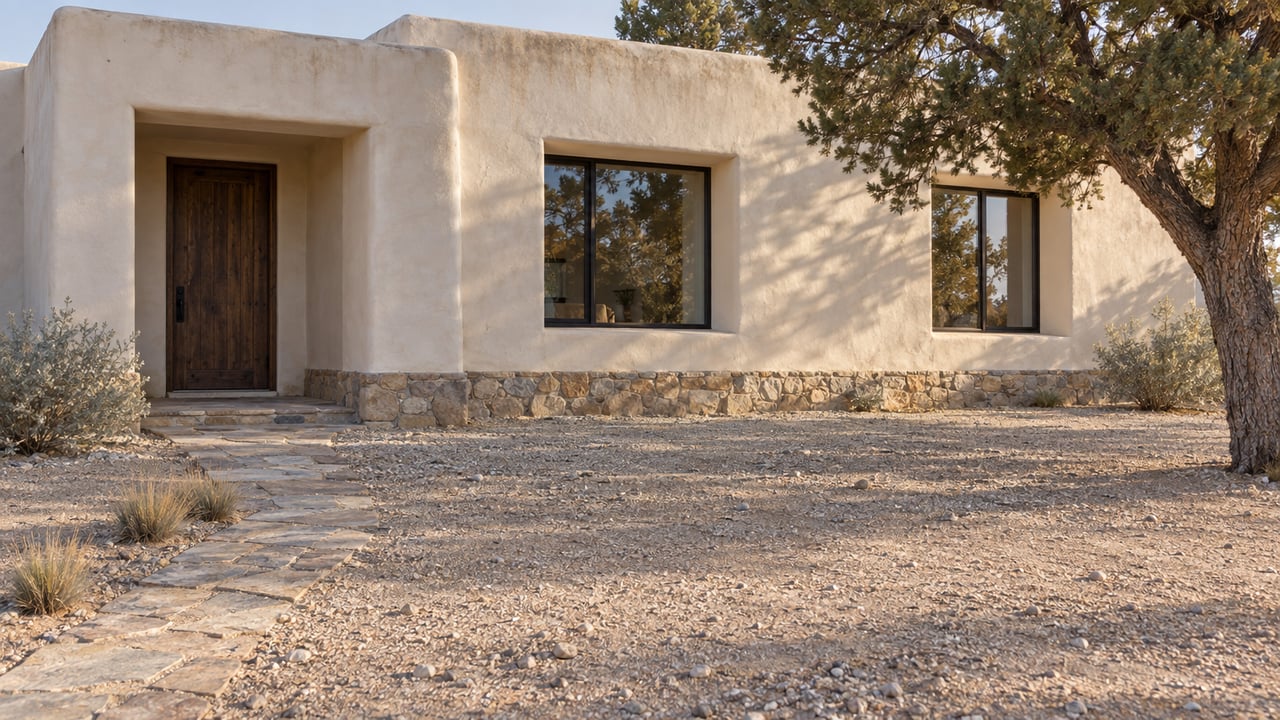
Walk the loop past Avenida Aldea on any given evening and you'll pass the same stretch of graded lots you passed last year, and the year before that. No awning going up, no delivery trucks, no scaffolding. Just decomposed granite, a few surveyor stakes, and the kind of quiet that makes newcomers assume something is about to happen. Residents have been walking past those same parcels since the mid-2000s.
Aldea de Santa Fe was planned with a plaza, a bell tower, specialty shops, and a village center with coffee and gathering space. The planned commercial core remains largely unbuilt, with one small operating café on the plaza site, and residents gather in other places around the neighborhood.
The master plan
A report in CNU's Public Square traces Aldea's origins to around 2001 and 2002, when DPZ CoDesign, the firm led by Andrés Duany and Alan Hoffman, laid out a 345-acre New Urbanist village on Santa Fe's northwest side. The plan called for 479 homes arranged around a genuine mixed-use core: live-work units, a bodega, restaurants, a boutique hotel, small businesses, all wrapped around a central civic plaza. Architect Stefanos Polyzoides, who wrote the book on New Mexico's historic plazas, designed the facades to echo Santa Fe's oldest streetscapes. On paper, the commercial entitlement ran to 185,000 square feet of retail and office space, which is not a modest number for a neighborhood of this size.
What got built instead is a residential village with excellent bones and an unfinished heart. The homes, trails, and open space all arrived more or less on schedule. The commercial core did not.
The café on the plaza
Cafe Aldea is the exception, and it carries more weight in the neighborhood's daily life than its footprint would suggest. Run by an owner residents know simply as Ferdy, it's a small operation on the plaza site serving coffee, breakfast, and pizza for pickup. Business listings show it's still active as of this year, and for a long stretch it was functionally the only commercial tenant in a plaza designed to hold a dozen. The café is a small commercial presence within the larger planned village center, most of which remains unbuilt.
Where the community gathers
None of this means Aldea lacks a social center. It just means the social center isn't retail. It's the clubhouse and the calendar.
Check the community events page on any given week and you'll find the same recurring names: the Wednesday Mah Jongg Group, tango sessions run under the Shields Tango banner, gatherings organized by the Stephanie Feldman Group. These aren't one-off pop-ups. They're the steady rhythm of a neighborhood that built its social infrastructure around the HOA's community building and fitness classes rather than around storefronts.
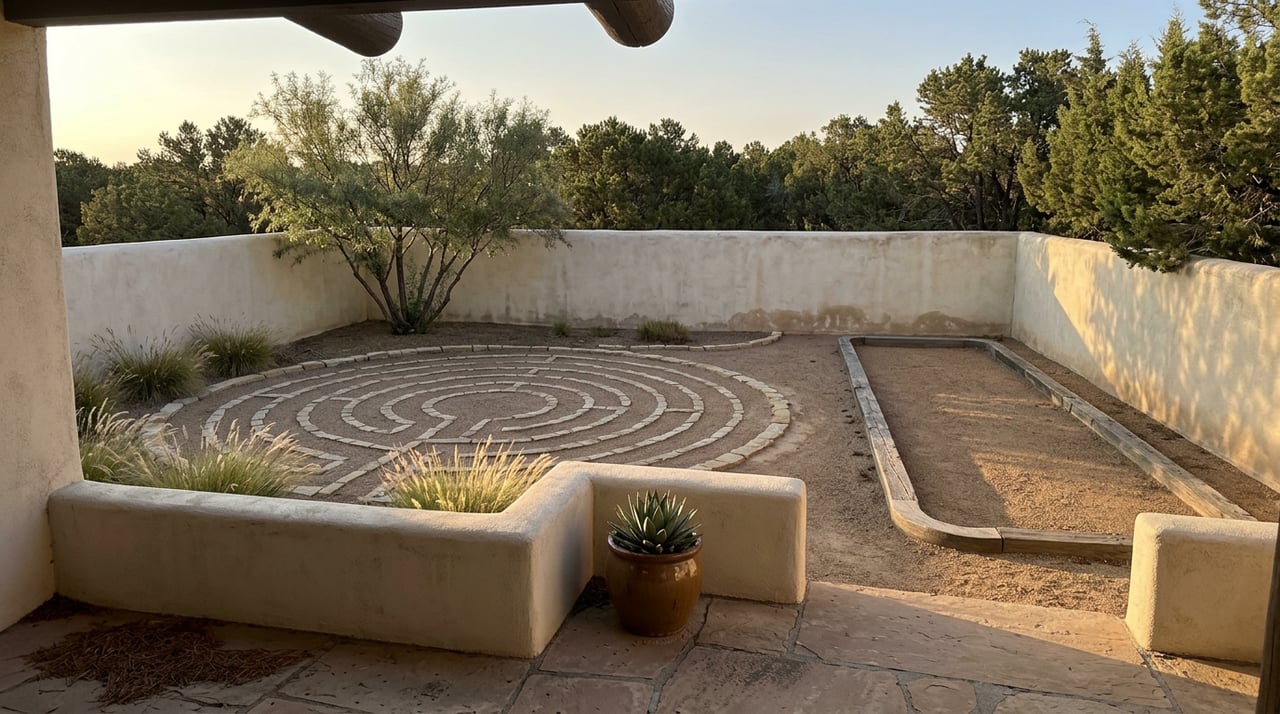
The physical amenities follow the same pattern. Aldea has tennis courts, pickleball courts, a basketball court, a bocce court, and a labyrinth, all tied into a walking trail network that connects to the broader Northwest Trail System. None of it requires driving anywhere. A resident who wants a full evening out inside the neighborhood boundary can get one, as long as the plan involves a racket, a paddle, or a walking loop rather than a dinner reservation.
For the dinner reservation, people drive. Fire Tacos and Runway 505 show up consistently on the list of spots Aldea residents actually frequent, both a short trip from the community rather than a walk from it. That distinction matters if you're comparing Aldea to neighborhoods where the corner café or the local bar is genuinely inside the gate. Here, the gate opens onto trails and courts. The kitchen table conversation about where to eat still ends with getting in the car.
The empty lots might not stay empty
In late 2023, three of the commercial lots in Aldea's plaza came up for sale simultaneously, the first time that had happened in the roughly twenty years since the community broke ground. The listings reportedly included secured water rights and entitlements already in place, which removes one of the biggest hurdles that typically stalls infill commercial projects. One concept floated at the time involved a wellness retreat built around a yoga and reception space, offices, guest casitas, and a handful of fractional-ownership homes, though that was a proposal under discussion rather than a confirmed project.
As of this spring, community materials still describe a separate Village Center Association whose job is to govern the plaza and commercial operations once they exist, language that reads as forward-looking rather than descriptive of something already finished. In other words, the parcels changed hands, or were at least offered for sale, but the physical build-out residents would notice from the sidewalk hadn't shown up by early 2026. If you live in Aldea, that's worth watching. When commercial space here does start filling in, it will change the calculus on those HOA dues too. Under the community's own structure, once the village center is occupied, commercial properties begin paying dues that are meant to roughly match what homeowners already pay, which would add commercial properties to the community's dues structure. As of 2024, quarterly HOA dues for homeowners ran $492; the commercial properties had not yet begun contributing to that structure.
None of this is a prediction about when construction starts. It's a way of explaining why those empty pads matter more than they look like they should. They are the part of the original plan that remains unbuilt; the late-2023 listings were a recent sign of movement.
Living with the gap
Today, Aldea's social life includes a clubhouse calendar of recurring events, a labyrinth path, a bocce court, and one small café. The planned plaza's wider commercial build-out remains incomplete, while residents have places to gather in the meantime.
Whether the planned commercial build-out changes in the next few years depends on what happens to those three parcels, and that's a genuinely open question worth watching if you live inside the gate.
If you're weighing Aldea against Santa Fe's other planned communities, or you want a clearer read on what a stalled commercial parcel means for property values nearby, the team at Stedman/Kehoe/Hirsch/Pollack can help you compare Aldea's planned commercial core with what's on the ground. Request a private consultation and we'll walk you through it in plain terms.
This article is general information, not legal, tax or financial advice. Consult a qualified professional about your situation.